
Problem Statement:
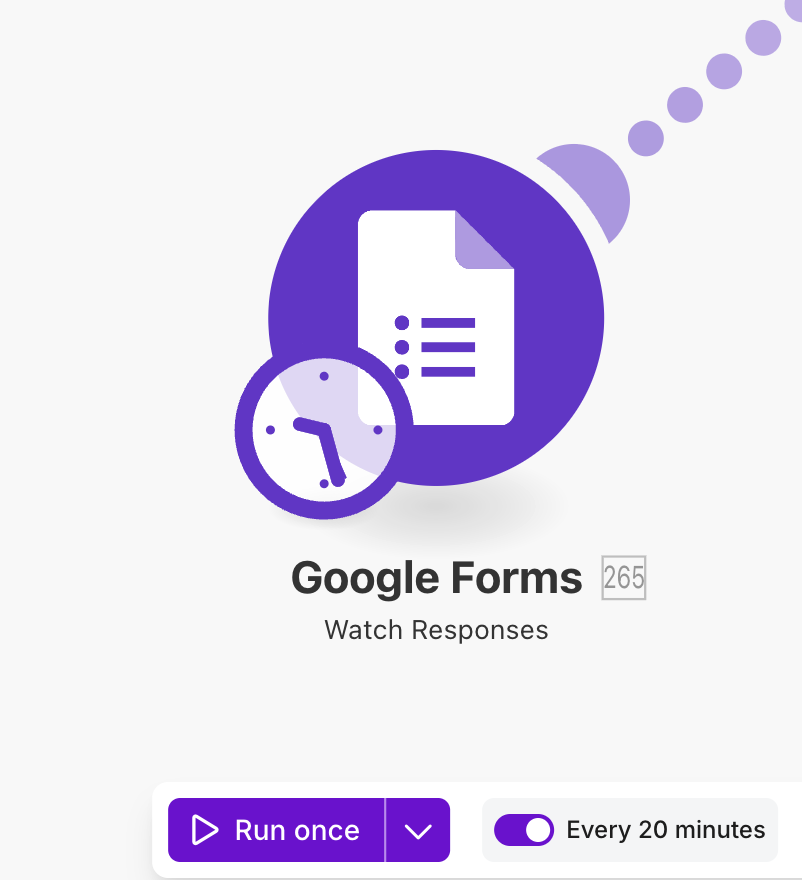
After preparing individual automations that run for 20 different regions or variables, the client wants to make it efficient. The scenarios are running every 20 minutes to check if there is any request received from the client to run the automation, and for that, all the 20 automations are set at a frequency of every 20 minutes with the “Watch Form responses” module as the first step. Since the clients make a request only once a month and dates are not specific, most of the operations for the Watch Responses module are wasted (1 operation per 20 minutes, per scenario).
Without affecting that frequency, how can we reduce the number of operations taken?
What we did:
Cost before efficiency is done:
There are 20 automations that run when a client submits a request using the Google Form, and every scenario is checking the form responses every 20 minutes.
So, even if there is no request, the Make.com scenario takes at least 1 operation per 20 minutes per scenario, which makes it ~2200 operations per scenario and 43,000 operations for all the 20 scenarios wasted every month just for checking if there is any request.
Taking into account the various pricing plans that Make offers, it costs around EUR 160 per month and almost ~2000 EUR per year.
To make it efficient – what did we do to reduce the costs?
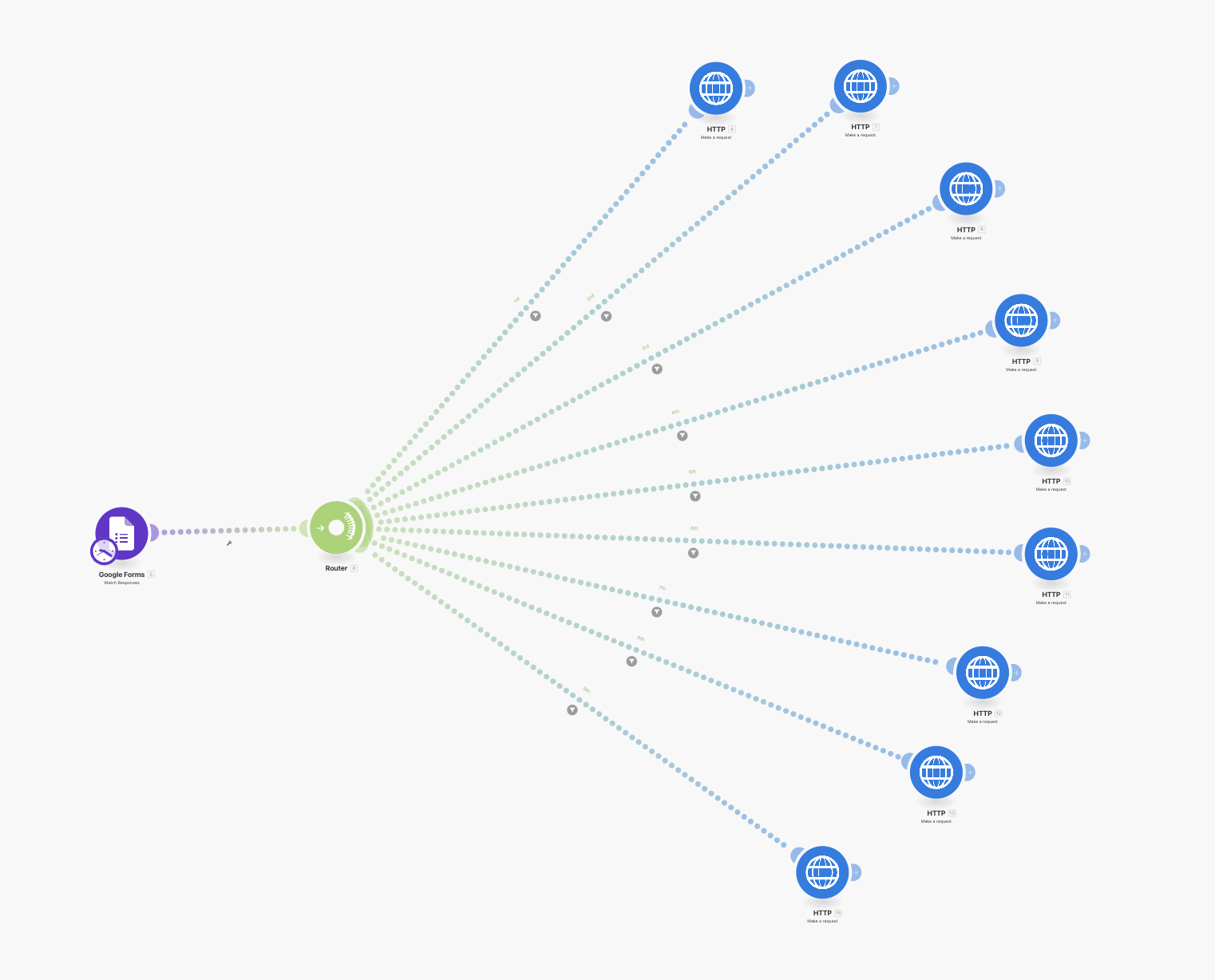
We implemented a single scenario that verifies the responses from Google forms, rather than relying on multiple scenarios to do so. It saves 95% of those wasted operations.
- Create one scenario that checks the form responses, and if there is any request from that form for any particular scenario, send that to the respective HTTP modules.
- Connect those HTTP modules with the individual scenarios using custom Webhooks.
- Ensure the individual scenarios are set to “Run immediately when requested.”
This way, we saved 95% of the operations (EUR 1800 per year) without depending on the frequency at which you are checking for the form responses.